
THE DARKER SIDE OF BRUGES
A Dark Tourist's Guide to Bruges
Bruges isn't exactly a difficult city to make look Gothic.
Medieval towers loom over narrow streets. Stone saints stare down from centuries-old buildings. Churches are filled with tombs, relics and reminders of death. And beneath the postcard version of the city is a much stranger Bruges that most visitors never go looking for.
If you're looking for the creepy, macabre and downright strange side of Bruges - medieval graves, unusual museums, religious relics, Gothic art and a few things that are simply difficult to explain - you've come to the right city.
Here are some of our favorite places to discover the darker side of Bruges.
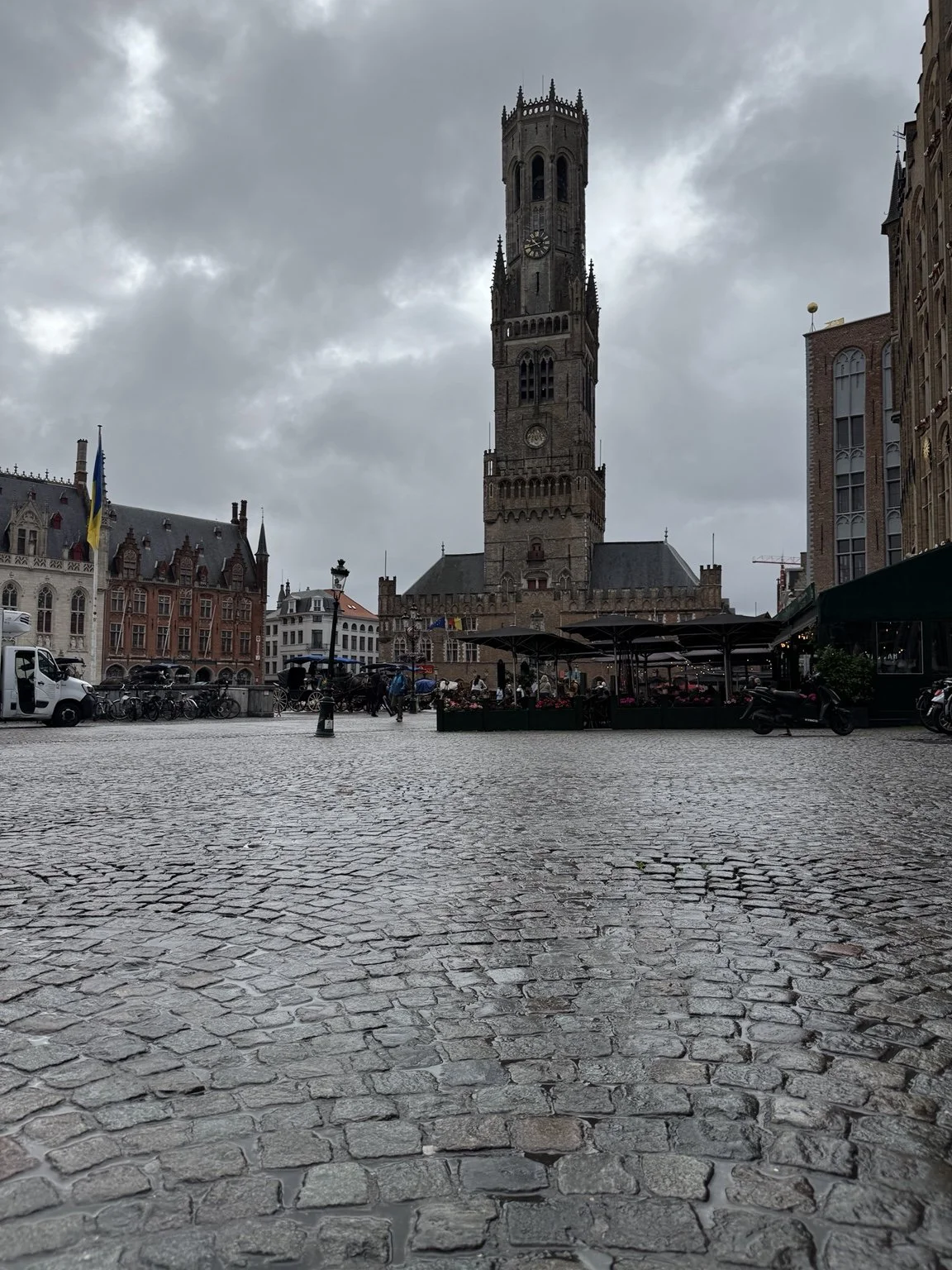
Visit a Medieval Chapel Containing a Murdered Man's Heart
The Jeruzalemkerk (Jerusalem Chapel) may be one of the strangest buildings in Bruges.
Hidden away in the quieter Sint-Anna district, the private chapel of the Adornes family was inspired by the Church of the Holy Sepulchre in Jerusalem. Its unusual architecture, dark interior, religious relics and recreation of Golgotha already make it feel unlike almost any other church in the city.
Then there's the tomb.
Anselm Adornes, the 15th-century merchant, diplomat and pilgrim responsible for much of what you see today, was murdered in Scotland in 1483.
His body remained there.
His heart came back to Bruges.
It now rests in the tomb he shares with his wife in the Jerusalem Chapel.
Where: Adornes Estate, Peperstraat
Dark-tourism rating: A human heart in a medieval tomb is difficult to beat.
Enter the Strange World of Lucifernum
Some places in Bruges are difficult to categorize.
Retsin's Lucifernum is one of them.
Hidden behind an otherwise unassuming door on Twijnstraat is the extraordinary private world created by William Retsin, an eccentric Bruges artist and collector who has described himself as a vampire.
Inside, Lucifernum is part art collection, part Gothic curiosity cabinet and part deeply eccentric personal universe. Dark rooms are filled with paintings, religious imagery, antiques, candles and objects collected and arranged by Retsin himself.
It's theatrical, strange and unlike virtually anything else you'll encounter in Bruges.
And unlike many of the city's darker attractions, Lucifernum isn't really about something terrible that happened centuries ago. The place itself is the attraction. Plus your entry ticket sometimes comes with a drink in the home’s bar at the end.
Public access can be limited, so check current opening information before making a special trip.
Where: Retsin's Lucifernum, Twijnstraat
Best for: Anyone who thinks their trip to Bruges could use considerably more vampires.
Find the “Cemetery of the Skull”
Just beyond Bruges' historic center lies one of the city's strangest and most overlooked places.
The Centrale Begraafplaats in Assebroek dates to 1787 and is considered the oldest cemetery in Belgium. Beneath enormous old trees, its paths wind past weathered statues, elaborate 19th-century tombs and gravestones slowly disappearing beneath moss and vegetation.
But one grave has given the cemetery a particularly macabre reputation.
A life-sized skull stares out from a stone pillow.
The moss-covered skull and crossed bones mark the grave of Antoine Michel Wemaer, a Bruges wine and textile merchant who died in 1837. The monument has become so recognizable that the cemetery is sometimes referred to as “The Cemetery of the Skull.”
And Wemaer's skull isn't the cemetery's only reminder of mortality. Look carefully at the older monuments and you'll find skulls, hourglasses, snakes and other symbols of death and the passage of time.
Where: Central Cemetery Bruges-Assebroek, Kleine Kerkhofstraat, Assebroek
Look for: The moss-covered Wemaer skull and the other memento mori hidden among the graves.
Go Looking for the Dead Beneath the Church of Our Lady
Everyone comes to the Church of Our Lady for Michelangelo.
We suggest paying considerably more attention to the dead.
The church contains the spectacular tombs of Mary of Burgundy and her father, Charles the Bold, two of the most powerful figures associated with Burgundian Bruges. Mary died in 1482 at just 25 years old after a riding accident.
But the stranger discovery is underneath your feet.
Archaeological excavations uncovered medieval brick burial chambers decorated with painted religious figures. Dating largely from the 13th and 14th centuries, these weren't paintings intended for churchgoers to admire.
They were painted inside the graves, surrounding the dead.
And there's another particularly Bruges-like death hiding here.
Pieter Lanchals, an adviser to Maximilian of Austria, was executed during a revolt in Bruges in 1488. His funerary monument bears the swan from his coat of arms - a detail that later became entangled with one of the city's enduring legends about why Bruges keeps swans on its canals.
Michelangelo suddenly has quite a lot of competition.
Where: Church of Our Lady, Mariastraat
Look for: The painted medieval graves beneath the church.
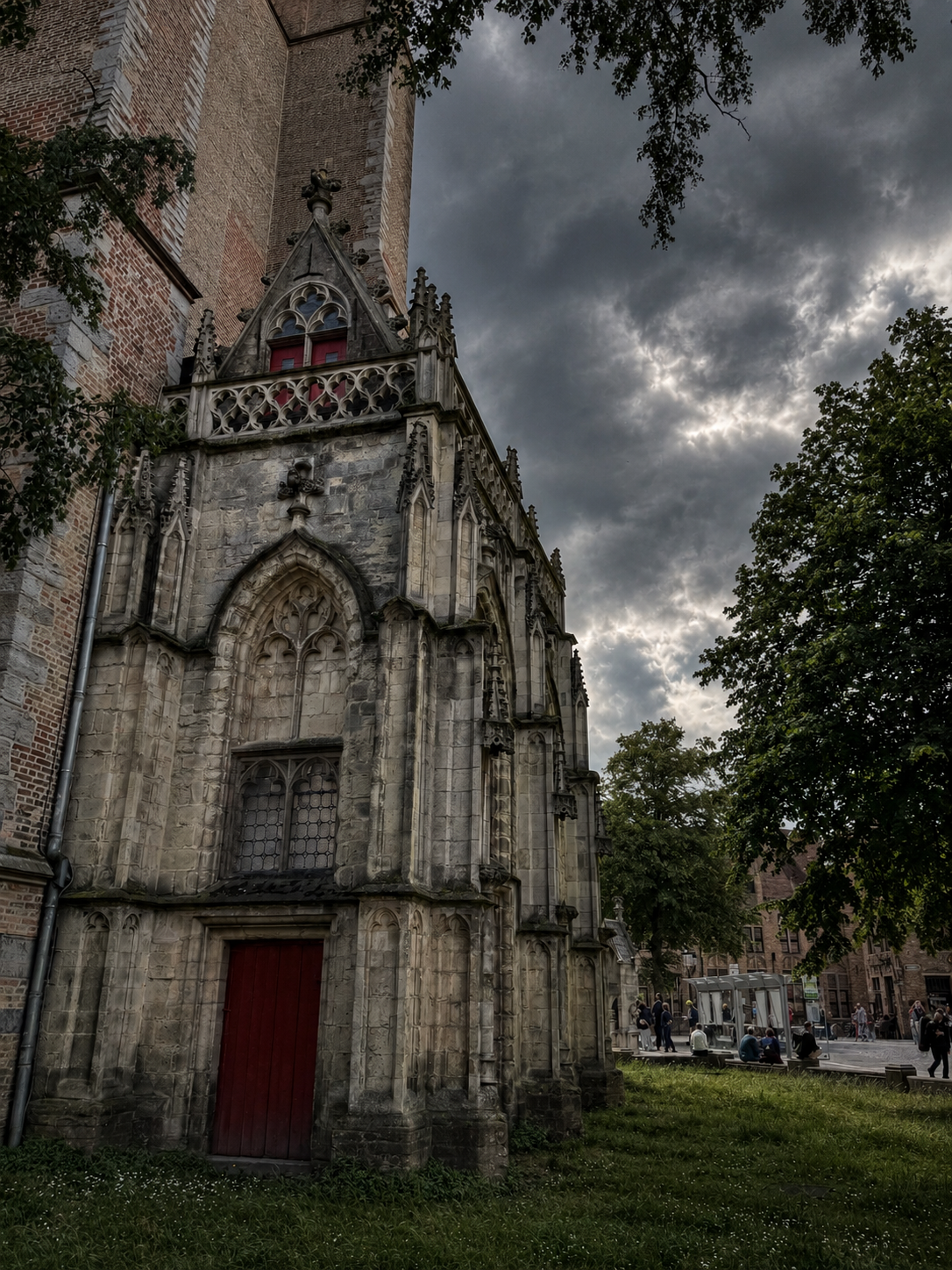
Explore 800 Years of Sickness, Death - and One Very Disturbing Pig
For more than 800 years, the sick have passed through the doors of Sint-Janshospitaal.
Founded in the 12th century, St John's Hospital is one of the oldest preserved hospital buildings in Europe. Its enormous medieval wards provided shelter and care for the sick, poor, pilgrims and travelers arriving in Bruges.
And caring for them could be dangerous.
According to the museum, 16 percent of the hospital's caregivers in the 14th and 15th centuries died within five years of entering. By the 17th century, that figure had fallen to 6.5 percent.
Medieval ideas about disease can still be seen in the building itself. The sick were cared for in the wards below while a ventilation system carried what was considered unhealthy air upward through the enormous attic and out of the building. Above them was a vast oak roof structure dating to around 1230.
Over the centuries, the people who passed through these halls lived in a world of recurring epidemics - including plague - and the hospital complex even had its own cemetery.
Today, the medieval hospital contains some rather unusual reminders of the centuries-old relationship between sickness, death and religion.
Hans Memling's magnificent Shrine of St Ursula, created for the hospital in the 15th century, was made to hold saints' relics. Its painted panels tell the legend of Ursula and her companions and their eventual martyrdom.
And then there's the pig.
Among all this medieval medicine, religious art and centuries of hospital history sits Patricia Piccinini's The Bridge: a life-sized, hyperrealistic creature with both human and pig-like features being cared for by a woman.
The sculpture isn't actually intended as horror. It's about empathy, compassion and overcoming our instinctive discomfort with something that looks different from us.
We understand the message.
We also found the giant human-pig profoundly unsettling.
And if that's not enough, nearby lies Berlinde De Bruyckere's Liggende-Arcangelo II: a life-sized fallen archangel stretched across a monumental, tomb-like pedestal.
Apparently 800 years of sickness and death weren't quite creepy enough.
Where: Museum Sint-Janshospitaal, Mariastraat
Look for: The pig. Trust us - you'll know it when you see it.
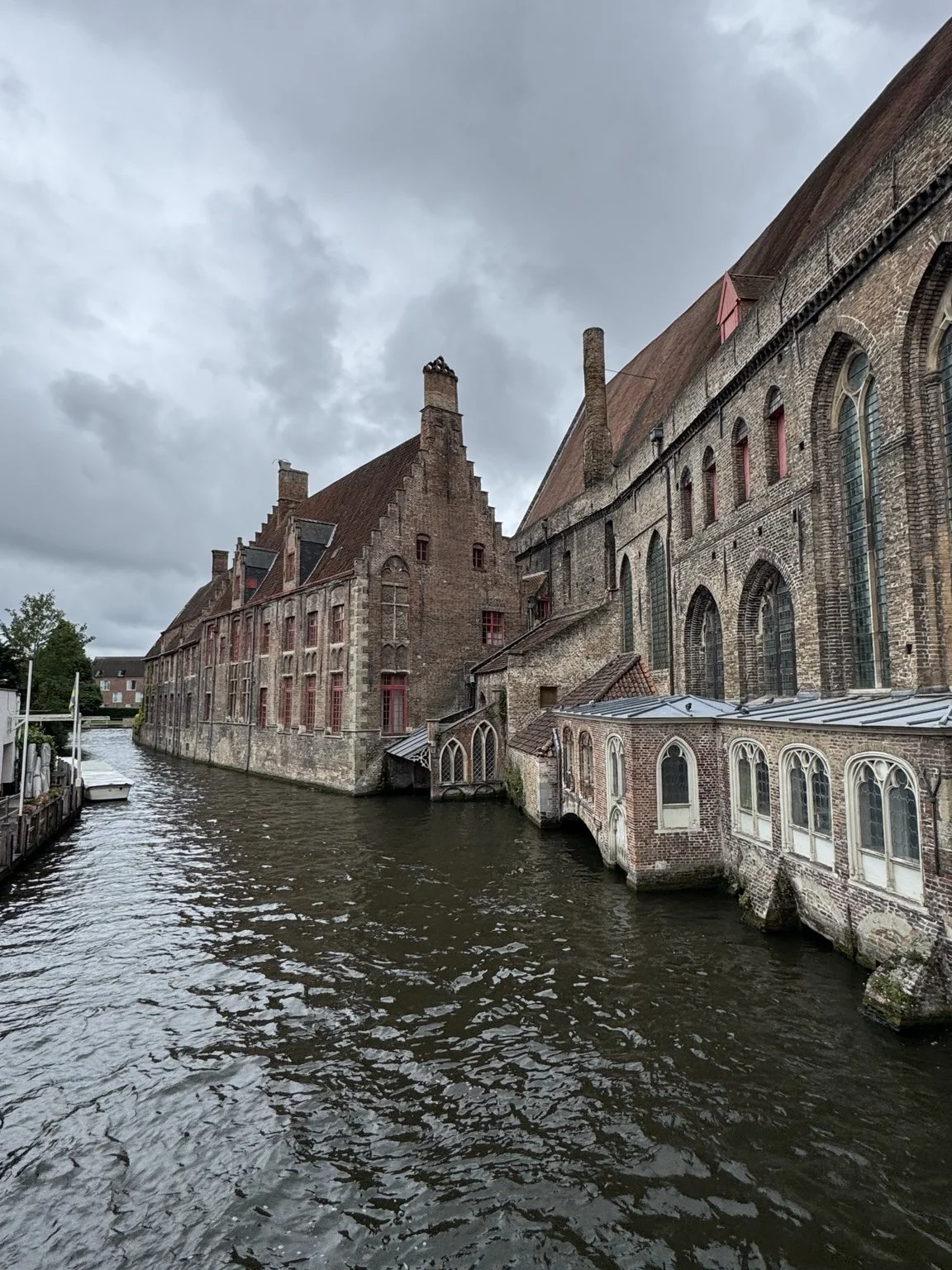
See Bruges' Most Mysterious Religious Relic
Not everything on a dark tourist's itinerary is dark because something terrible happened there.
Sometimes it's an object that reminds us just how differently people in the past experienced death, faith and the physical remains of the sacred.
Inside the Basilica of the Holy Blood is one of Bruges' most extraordinary objects: a crystal vial traditionally believed to contain the blood of Jesus Christ.
For centuries, the relic has been an object of profound religious devotion. The familiar story says it was brought to Bruges following the Crusades, although the historical record surrounding its arrival is considerably more complicated.
Whatever its origins, the relic became so important to the city that Bruges developed an entire medieval procession around it—a tradition that continues today.
For believers, the Holy Blood remains a sacred object.
For anyone fascinated by medieval history, it's also an extraordinary glimpse into a world in which the physical remains associated with saints and Christ weren't simply historical curiosities. They were believed to connect the living directly with the sacred.
Where: Basilica of the Holy Blood, Burg
Remember: This is an active place of worship and an object of religious devotion, so visit respectfully.
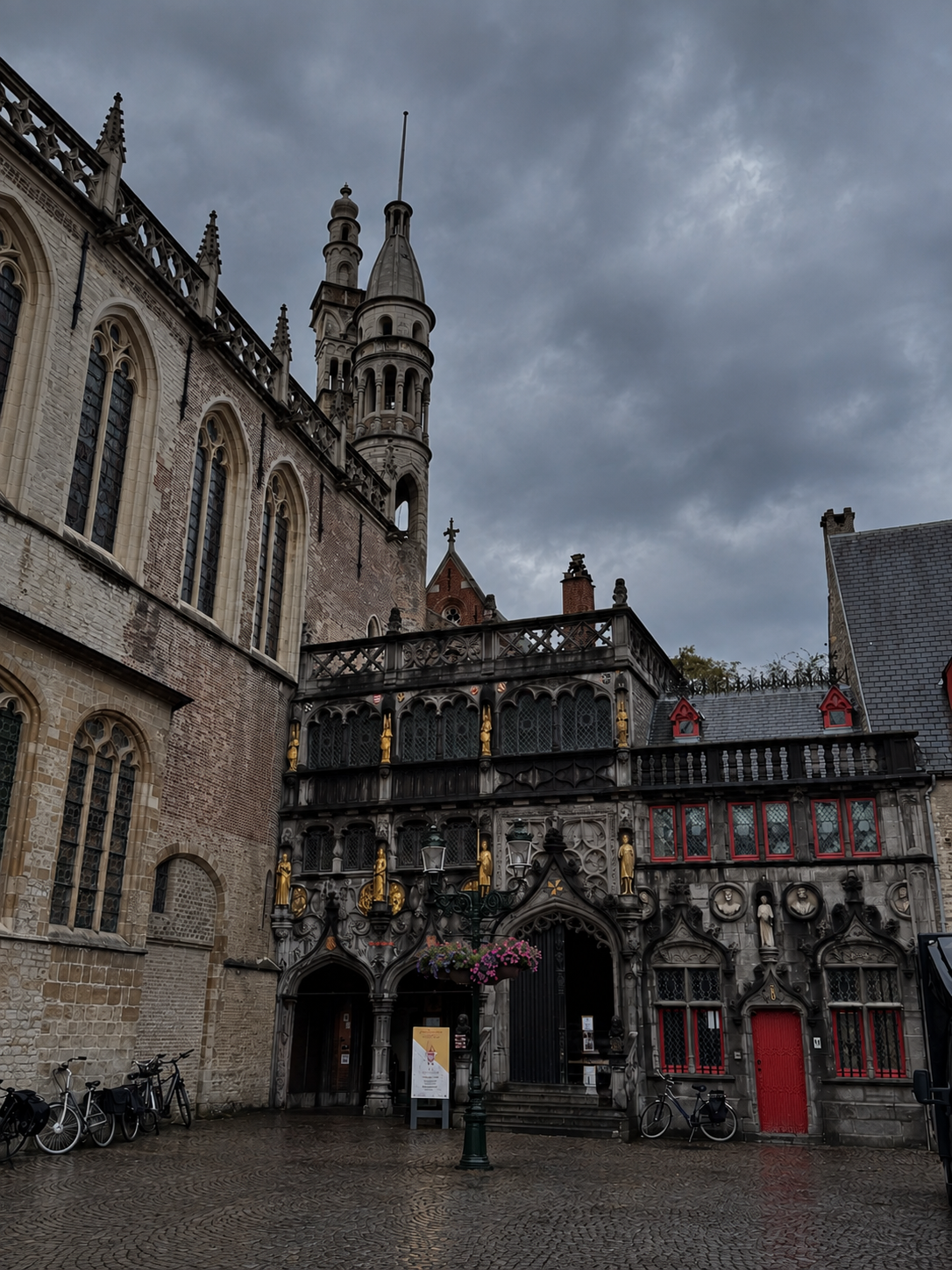
Find the Skull on a Medieval City Gate
Walk through the Smedenpoort, one of Bruges' surviving medieval city gates, and look up.
There's a skull staring back at you.
The skull marks the grim fate of François Vander Straeten, who was accused of plotting to allow enemy French troops into Bruges at the end of the 17th century.
The plot failed.
Vander Straeten was executed—and his severed head was displayed on the Smedenpoort as a warning to anyone else considering betraying the city.
Fortunately, that's not his actual skull above the gate today.
A bronze skull now marks the place where his head was once displayed.
It's exactly the sort of detail that makes Bruges interesting: thousands of people pass through the gate without realizing they're walking beneath a memorial to a man's decapitated head.
Where: Smedenpoort
Look for: The bronze skull above the passage.
Find More Paintings Made for the Dead
If the painted graves beneath the Church of Our Lady caught your attention, Bruges has more.
Inside St Saviour's Cathedral, medieval burial chambers preserve another extraordinary example of the city's relationship with death.
Dating from the 14th century, these brick graves were decorated with painted religious figures and scenes. But unlike paintings hanging in a church, these images weren't primarily created for the living to admire.
They were painted inside the tombs, surrounding the dead.
Once the grave was sealed, much of this artwork would disappear from view along with the person buried inside it.
There's something wonderfully strange about that idea: medieval artists carefully decorating a space that almost no living person was ever expected to see again.
Where: St Saviour's Cathedral, Sint-Salvatorskerkhof
Look for: The painted medieval burial chambers.
Go Looking for Hell at the Groeningemuseum
The Groeningemuseum is famous for its collection of Flemish art.
We suggest going directly to Hell.
Among the museum's darker works is a Last Judgement attributed to Hieronymus Bosch and his workshop, dating from around 1500.
And it contains exactly the sort of nightmare you'd hope for from Bosch: demons, tortured bodies, bizarre creatures and the damned being subjected to an extraordinarily imaginative assortment of punishments.
The subject wasn't simply an excuse for medieval horror.
Images of the Last Judgement reminded viewers that death was coming for everyone—and that what happened afterward might depend rather heavily on how you'd behaved while you were alive.
Bruges apparently had something of a taste for the subject. The museum's collection also includes Last Judgement scenes by Jan Provoost and Pieter Pourbus, giving you several opportunities to contemplate eternal damnation before lunch.
Cheerful stuff.
Where: Groeningemuseum, Dijver
Look for: Last Judgement, attributed to Hieronymus Bosch and his workshop, around 1500.
Keep in mind: The Groeningemuseum is scheduled to close for renovation in January 2027. From March 2027, highlights from the Groeninge collection will be displayed at the new BRUSK museum, located right next door on the Dijver. Check the current Musea Brugge listings before visiting.
Grab a beer in a medieval cellar
After a day of skulls, graves, relics, ghosts and visions of Hell, you'll probably need a beer.
Fortunately, Bruges has some drinking spots that fit the mood remarkably well.
Our favorite for sheer atmosphere is Le Trappiste. Hidden beneath Kuipersstraat, the bar occupies a 13th-century medieval cellar originally used by the coopers who worked in this part of Bruges. Barrels were stored underground here until the cellar eventually fell out of use, was sealed up and forgotten - and then rediscovered during building work in 1973.
Today, you descend below street level into vaulted stone chambers filled with Belgian beer. Creepy, right?
If that's full - or one medieval cellar isn't enough - try 't Poatersgat, another atmospheric underground beer café hidden behind an easy-to-miss entrance on Vlamingstraat.
For something hidden rather than subterranean, look for De Garre. It's tucked down an extraordinarily narrow passageway whose name essentially means a crack or crevice in West Flemish. The alley was once a fire lane leading toward the canals; today it's considerably more useful for finding Belgian beer.
And if you'd rather drink somewhere with five centuries of history above ground, head to Café Vlissinghe in the quieter Sint-Anna quarter. It's the oldest documented café in Bruges, appearing in written records as early as 1515.
Our pick: Le Trappiste for the atmosphere.
Also try: ’t Poatersgat, De Garre or Café Vlissinghe.
The Darker Side of Bruges Doesn't End Here
One of the things we love about Bruges is how much strange history is hiding in plain sight.
A skull above a city gate. Paintings made for the inside of medieval graves. A human heart returned from Scotland. A centuries-old vial of blood. Bosch's vision of Hell. And, for reasons entirely of its own, an alarmingly realistic human-pig.
And those are only the things we're telling you about here.
If you'd like to discover some of the darker stories that aren't in this guide, that's where we come in.
Haunted Bruges is a 90-minute English-language evening walking tour exploring the darker history, legends and ghost stories hiding behind the city's postcard-perfect façades.
DISCOVER HAUNTED BRUGES & BOOK YOUR TOUR →
A Note on Dark Tourism in Bruges
Not every place associated with death or tragedy is an attraction.
Churches remain places of worship. Bruges' cemetery remains an active burial ground. Religious relics continue to have profound meaning for believers.
Explore them with curiosity, but also with respect.
Fortunately, Bruges has spent the better part of a thousand years accumulating strange stories, unusual objects and reminders of the dead.
There's plenty to discover without disturbing them.