Things to Do in Bruges at Night
Bruges is beautiful during the day. But we think the medieval city is at its best after dark. Bruges isn't a city of all-night attractions and that's part of what makes its evenings special. Museums close, canal boats dock and day-trippers head for the station. But the city doesn't shut down. You just need to know where to look.
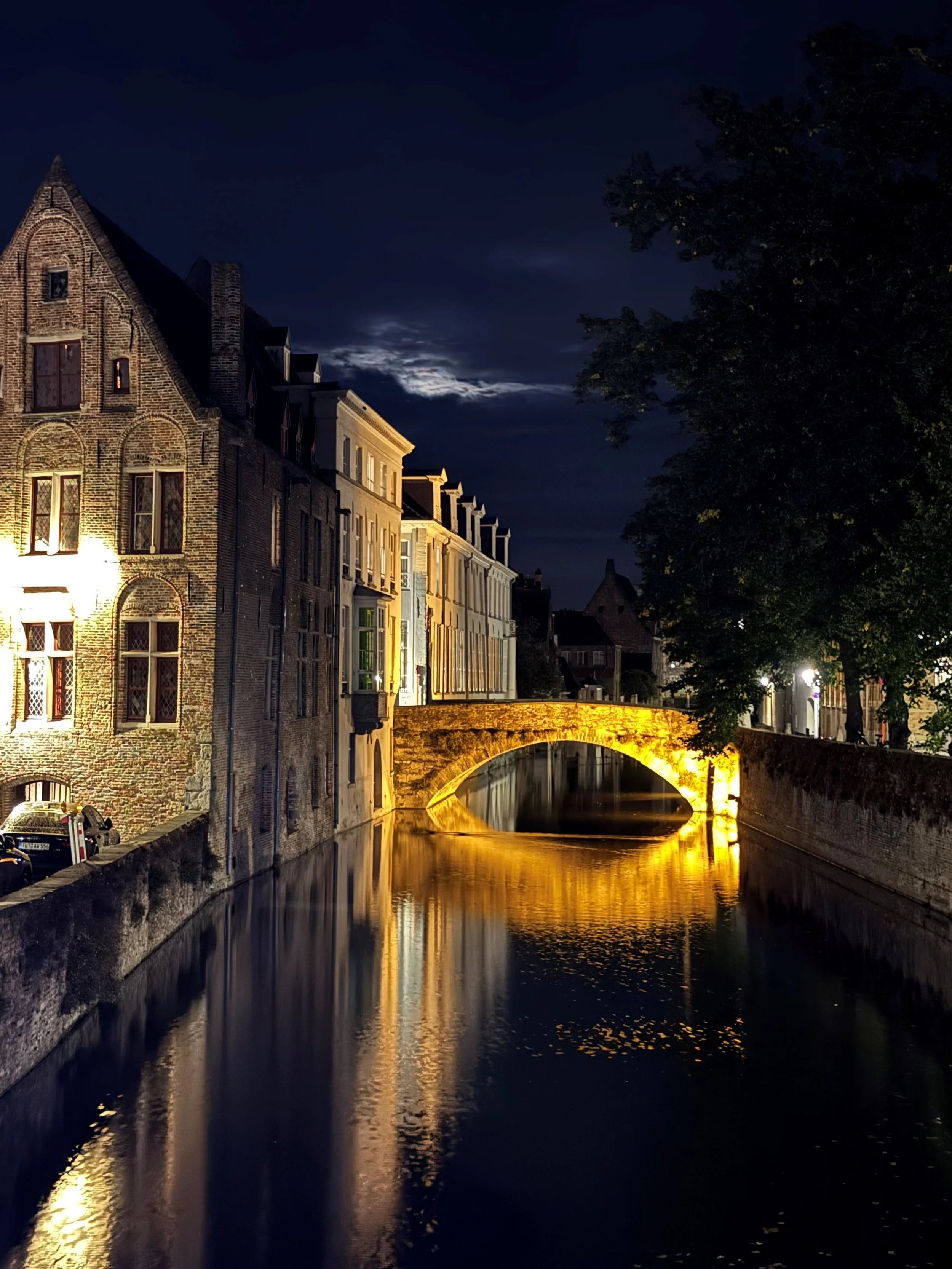
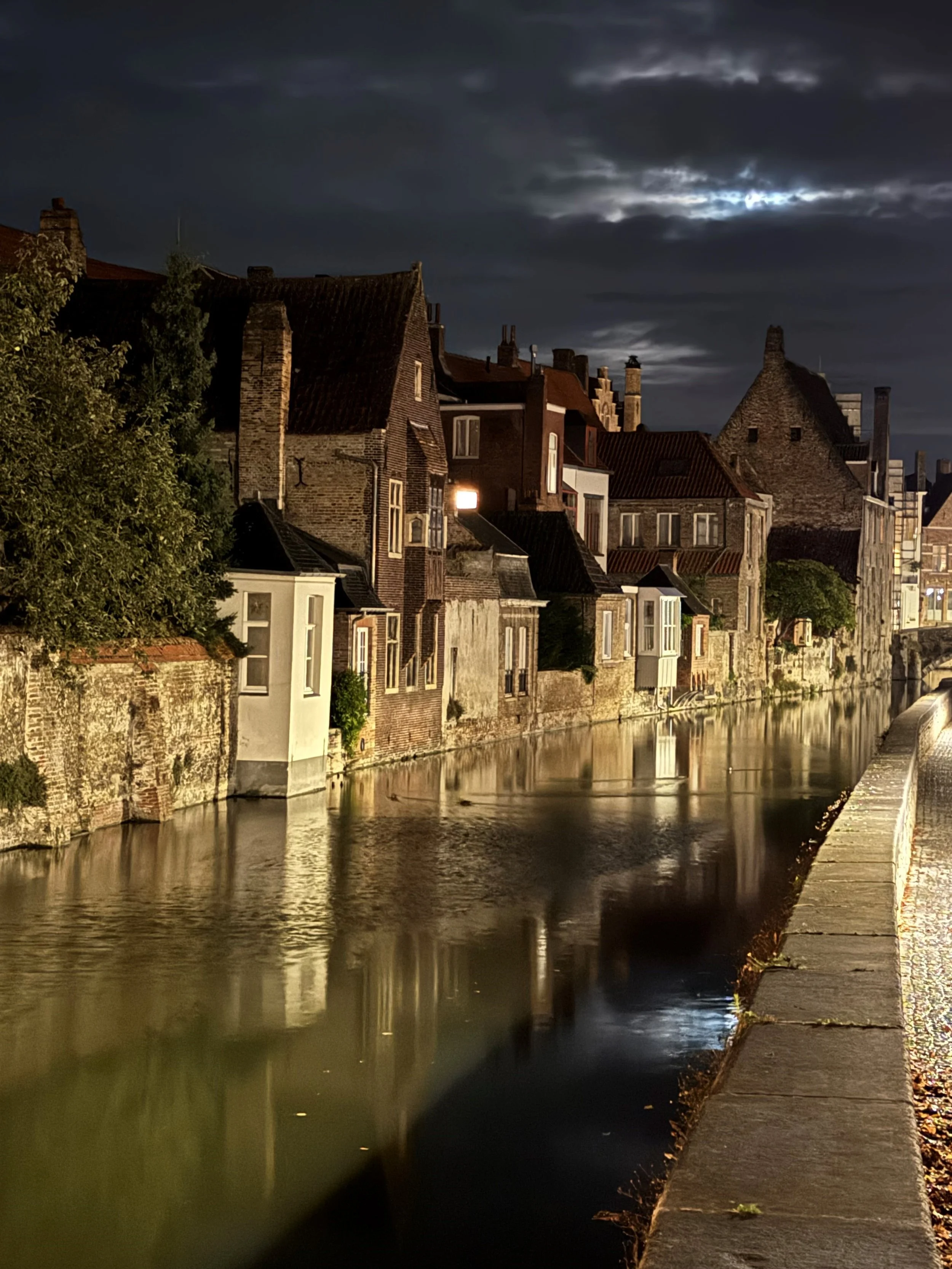
Once the day-trippers disappear and the streets grow quieter, Bruges takes on a different character. Medieval buildings glow across the canals, narrow streets disappear into shadow, centuries-old pubs fill up, and the city's darker history somehow feels a little closer.
From nighttime walks along the canals and atmospheric places for a Belgian beer to ghost stories, medieval legends and some of the city's quieter corners, here are some of our favorite ways to experience Bruges after dark.
1. Discover the Darker Side of Bruges
Evening is a perfect time to discover the stories hiding behind the postcard-perfect façades. Haunted Bruges explores the darker history and legends of the city - from plague and public executions to witch trials, murder and ghost stories - all while walking the streets where centuries of Bruges history actually unfolded.
Our 90-minute English-language evening walking tour combines documented history, local legends and some of the quieter corners of the medieval city.
Explore the Haunted Bruges tour →
2. Have a Beer in an 800-Year-Old Medieval Cellar
Belgian beer is hardly difficult to find in Bruges. The setting, however, can make all the difference.
Hidden beneath Kuipersstraat, Le Trappiste is a specialist beer bar inside a medieval cellar dating back roughly 800 years. The cellar was once used to store the wooden barrels that were essential to medieval trade before eventually being sealed off and forgotten for centuries.
Today, you descend below street level into the old vaulted cellar to choose from an enormous selection of Belgian beers.
Another underground option is 't Poatersgat, hidden behind a small entrance on Vlamingstraat. Head down the stairs and you'll find another atmospheric medieval cellar with a huge selection of Belgian beers. It's also a particularly good option later at night, when much of Bruges has already gone quiet.
Are they haunted? Who knows?
Does sitting underground with a Belgian Tripel in a dimly lit 13th-century cellar feel appropriately spooky? Absolutely.
If you'd rather stay above ground, De Garre is another favorite: a tiny beer café hidden down an alley just steps from the Markt, famous for its powerful house tripel.
3. Drink at the Oldest Café in Bruges
For something just off the busiest tourist streets, head into the Sint-Anna quarter in search of Café Vlissinghe.
Hidden away on Blekersstraat, Vlissinghe first appears in the historical record in 1515, making it the oldest café in Bruges. More than five centuries later, you can still walk in, order a beer and drink surrounded by dark wood, old paintings and pieces of the café's long history.
Part of the appeal is getting there. Even though it’s just a few minutes away by foot, Sint-Anna feels noticeably removed from the crowds around the Markt, and Vlissinghe is the sort of place you could easily spend an entire trip to Bruges without discovering.
It also has some mysteries of its own: the heritage collection connected to the café includes centuries of paintings, photographs and objects—including an old card game discovered in a fireplace and a mysterious portrait known as Theunis and his wife.
If you're looking for a drink somewhere that actually feels connected to old Bruges rather than simply serving Belgian beer to tourists, it's worth the walk.
4. Look for Bruges' Darker Details
You don't need to enter a museum to find evidence of Bruges' stranger and darker past. Some of it is hiding in plain sight.
Find the skull at the Smedenpoort.
Take a walk out to the Smedenpoort, one of Bruges' surviving medieval city gates, and look carefully above the left passage. You'll see a bronze skull staring back at you.It marks the fate of François Vander Straeten, who was accused of plotting to allow enemy French troops into Bruges at the end of the 17th century. The plot failed. Vander Straeten was executed, and his severed head was displayed on the gate as a warning to anyone else considering betraying the city.
The head is long gone. The skull remains.
2. Look for the man holding his nose in Tanners' Square.
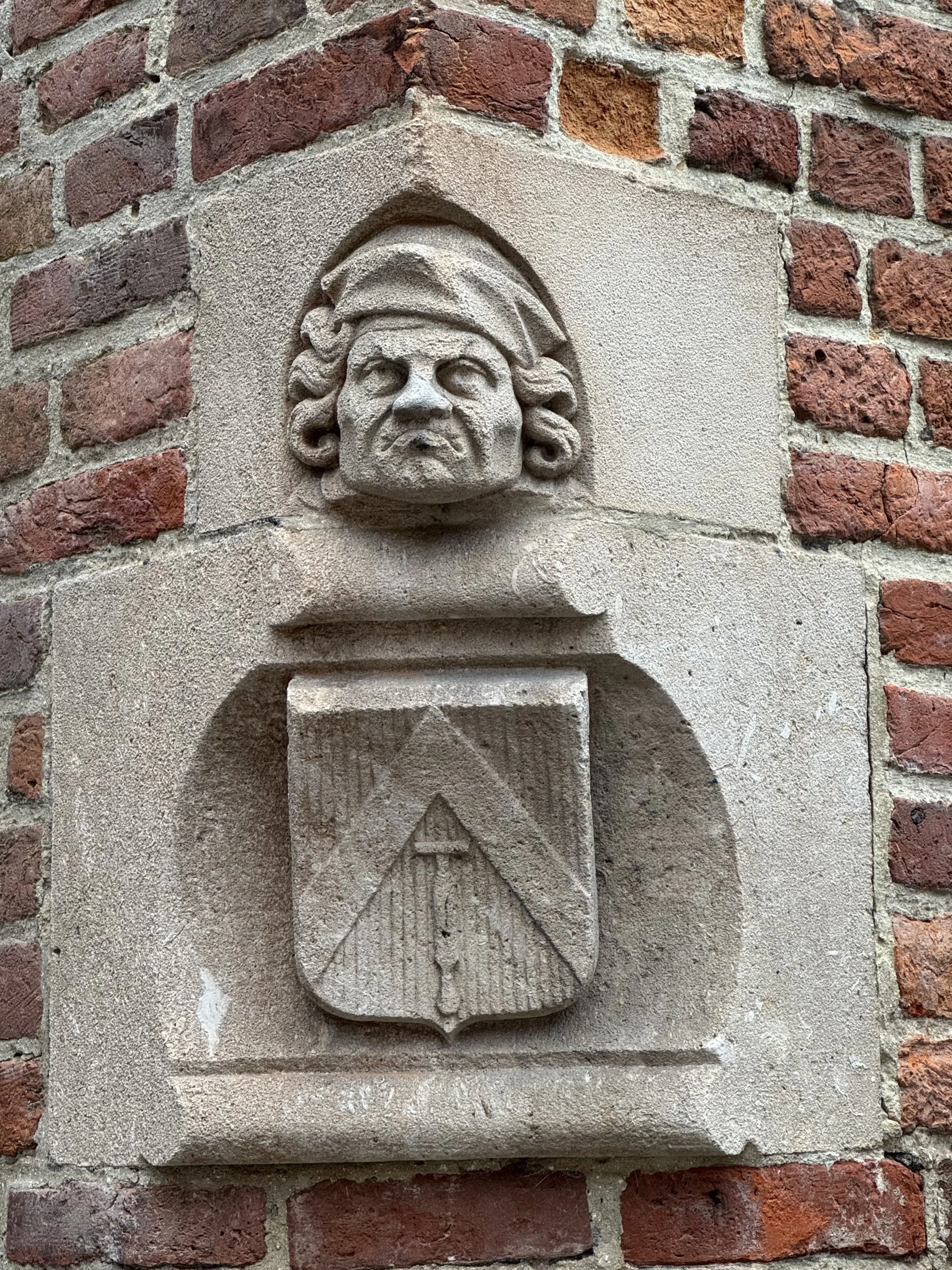
Huidenvettersplein is now one of the prettiest little squares in Bruges. In the Middle Ages, you probably wouldn't have wanted to linger.This was the domain of the city's tanners, who turned animal hides into leather using processes involving some particularly unpleasant ingredients—including urine and animal waste. Look carefully near No. 10 and you'll find a tiny stone face built into the corner, apparently holding his nose against the smell.
Five hundred years later, the tanners are gone. Their disgusted little neighbour is still there.
3. Listen for legends at the Minnewater.
The Minnewater may be known today as the romantic “Lake of Love,” but even this beautiful corner of Bruges comes with darker stories.One old explanation for the name connects the water with minnen—water spirits once believed to inhabit it. Another legend tells of Minna, a young woman who fled an arranged marriage to find the man she loved. When he finally found her, she was exhausted and dying, and according to the story she died in his arms beside the water.
Today, couples are told that crossing the Minnewater Bridge together will bring them eternal love.
Apparently Bruges decided to leave out the dying-in-your-lover's-arms part when it came up with the tourism slogan.
That's Bruges after dark: beautiful at first glance, considerably stranger when you know where to look.
5. Take a Walk Through the Quieter Side of Bruges
Once the day-trippers have disappeared, skip the busiest route around the Markt and head toward the quieter canals of northern Bruges instead.
Start at Jan van Eyckplein, once the heart of Bruges' medieval trading world. Ships once entered the city here, surrounded by merchants, warehouses and toll houses. At night, with the cafés quieter and the crowds gone, it's one of our favorite squares in Bruges.
From there, follow Spiegelrei toward the Gouden-Handrei. This stretch of canal formed part of Bruges' earliest city defenses and is noticeably quieter than the famous waterways around Rozenhoedkaai.
When you reach the Gouden-Handrei Bridge, look closely at the stonework. You'll find a hand holding an eel—a reference to an old Bruges legend about a fisherman, a mysterious golden hand and an encounter that did not end particularly well for the fisherman.
Continue through the little bridges and streets around the Gouden-Handrei before turning back toward the historic center.
Along the way, you can make a slight detour down Twijnstraat and walk past one of Bruges' stranger addresses: Retsin's Lucifernum. Behind an otherwise unassuming door lies the eccentric private world of a man who has described himself as a real-life vampire.
We'll leave the rest to your imagination.
From there, gradually make your way south toward Groenerei, one of the most beautiful stretches of canal in Bruges. By this point in the evening, the boats have stopped running and the water has gone still. Old brick façades, trees and bridges reflect in the still water, and Bruges begins to feel like a very different city from the one you saw a few hours earlier.
Our advice: don't rush it. Bruges after dark is best when you occasionally have no idea where you're going.
6. Find Some Live Music
Bruges isn’t famous for its nightlife, but there’s more happening after dinner than you might expect.
For jazz and blues, check the schedule at 27B Flat, an intimate jazz club tucked away on Sint-Jakobsstraat. Joey's is another small, characterful option for blues, jazz and rock, while De Kelk on Langestraat combines a traditional Belgian brown café with a concert space in the back.
For something bigger, Cactus Muziekcentrum hosts everything from indie, rock and jazz to punk, hip-hop and experimental music, while Concertgebouw Brugge is the place to look for classical music and larger cultural performances.
The schedules change constantly, which is part of the fun. Rather than planning around a particular venue, check what's happening while you're in town—you may find a tiny jazz concert, a local band or something completely unexpected.
See what's happening in Bruges tonight →
7. Listen to the Belfry After Dark
You've probably already heard the bells of the Belfry while walking around Bruges during the day. In summer, however, there are opportunities to hear the carillon as an actual evening performance.
Bruges traditionally schedules summer carillon concerts, with performances taking place after most daytime sightseeing has finished. In 2026, a series of concerts was scheduled at 8 p.m., allowing visitors to listen from the streets and squares surrounding the Belfry.
You don't need to climb the tower or even buy a ticket. Find somewhere nearby, look up at the Belfry and listen.
This one is seasonal, so check the current Bruges events calendar before planning your evening around it.
8. Spend a Rainy Evening at the Cinema
Rain and Bruges have a longstanding relationship. Fortunately, there's a better backup plan than sitting in your hotel room.
Cinema Lumière Brugge is a small arthouse cinema tucked into the historic center on Sint-Jakobsstraat. The program mixes new releases, international films and independent cinema, and films are generally shown in their original language with subtitles where necessary—making it much more useful for international visitors than you might expect.
Next door is De Republiek, a lively café and bar, so you can easily turn a rainy evening into dinner or drinks and a film.
And there's something rather satisfying about disappearing into a cinema on a cold, wet night in medieval Bruges.
*******************
Bruges After Dark
Bruges doesn't need much help being atmospheric.
Once evening settles over the canals, the city becomes quieter, stranger and - at least to us - a little more interesting. Have a beer underground, hunt for some of the darker details hiding in the medieval streets, catch some live music, or simply wander until you find a canal you've never seen before.
And if you'd like to know what happened on some of those streets over the last few centuries, that's where we come in.
Haunted Bruges is a 90-minute English-language evening walking tour exploring the darker history, ghost stories and legends of the medieval city.
Discover Haunted Bruges & book your tour →
Good to Know
Bruges is very much a daytime sightseeing city, and many museums, historic buildings and attractions close by late afternoon or early evening. If there's somewhere you particularly want to visit, check the opening hours before saving it for later in the day.
But don't mistake closed for nothing to do.
Some of our favorite hours in Bruges begin after the doors are locked